


Busy Lifestyle? Easy Hydration Tips for Diabetics
1. Introduction: Hydration Challenges in a Busy Life
In today’s fast-paced world, staying hydrated often takes a backseat to deadlines, commutes, and constant screen time. For individuals managing Type 2 Diabetes, this can be a serious concern. Hydration is not just about quenching thirst—it plays a key role in maintaining stable blood sugar levels, supporting kidney function, and improving overall energy.
A busy lifestyle can make it easy to forget to drink water regularly. Many people rely on quick fixes like coffee or sugary beverages, which can worsen blood sugar control instead of helping it. Over time, this pattern can lead to dehydration, fatigue, and even unexpected spikes in glucose levels.
The good news is that staying hydrated does not require drastic lifestyle changes. With a few simple and practical habits, it is possible to maintain proper hydration even on the busiest days. This article explores easy and effective hydration tips specifically designed for people managing diabetes.
2. Why Hydration Is Crucial for Diabetics
For individuals with Type 2 Diabetes, hydration plays a vital role in regulating blood sugar. Water helps dilute glucose in the bloodstream and supports the kidneys in flushing out excess sugar through urine. When hydration levels are adequate, the body can manage blood sugar more efficiently.
Dehydration, on the other hand, can cause blood sugar levels to rise. When the body lacks fluids, glucose becomes more concentrated, leading to higher readings. This can make diabetes management more challenging and increase the risk of complications.
Additionally, proper hydration helps prevent symptoms such as fatigue, dizziness, and headaches, which are often mistaken for blood sugar fluctuations. It also supports digestion and circulation, both of which are essential for overall health.
Understanding the importance of hydration is the first step toward building habits that support better diabetes control.
3. Start Your Day with Water
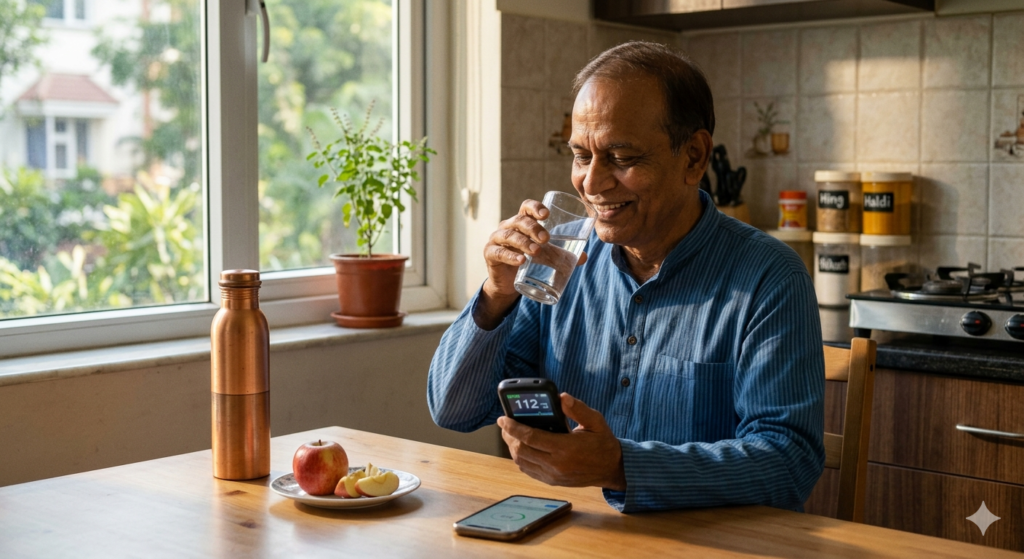
One of the simplest ways to improve hydration is to start your day with a glass of water. After several hours of sleep, the body naturally becomes dehydrated. Drinking water in the morning helps rehydrate the system and kickstart metabolism.
For people with Type 2 Diabetes, this habit can also support better blood sugar control. Morning hydration helps maintain blood volume and may prevent early spikes in glucose levels.
Keeping a glass or bottle of water near your bedside can serve as a reminder. Making this a daily routine ensures that hydration begins before the day’s distractions take over.
This small habit sets the tone for consistent water intake throughout the day and requires minimal effort.
4. Carry a Water Bottle Everywhere
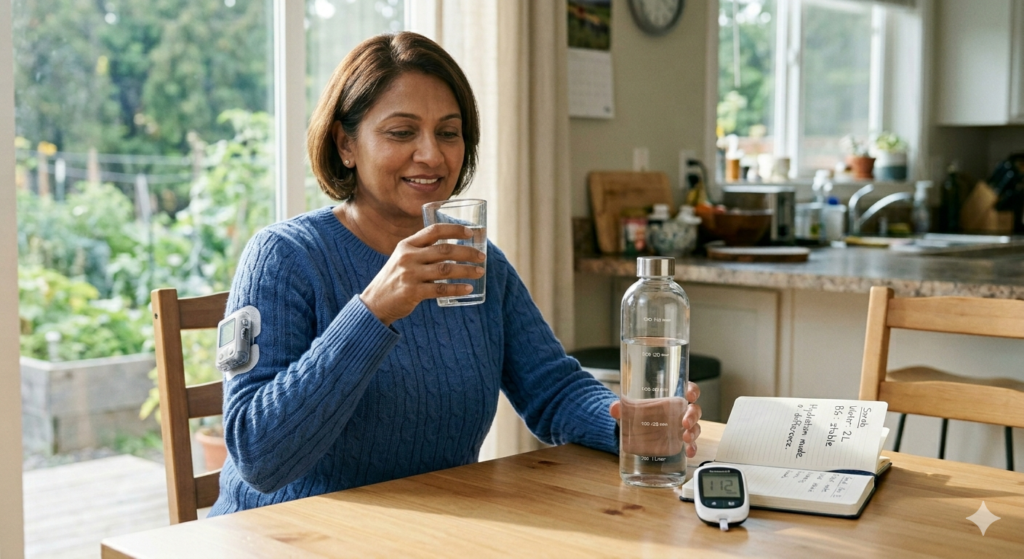
In a busy lifestyle, convenience is key. Carrying a reusable water bottle makes it easier to stay hydrated without having to think about it constantly. Whether at work, commuting, or running errands, having water within reach encourages regular sipping.
For diabetics, this habit is especially beneficial. It helps maintain steady hydration levels, which can contribute to more stable blood sugar readings. Instead of waiting until thirst sets in, having a bottle nearby promotes proactive hydration.
Choosing a bottle with measurement markings can also help track daily intake. This adds a layer of accountability without requiring extra effort.
By making water easily accessible, staying hydrated becomes a natural part of your routine rather than a task you have to remember.
5. Set Simple Hydration Reminders
Busy schedules often lead to skipped meals—and skipped water breaks. Setting reminders on your phone or smartwatch can be an effective way to build a hydration habit. These reminders can be spaced throughout the day to prompt you to drink water regularly.
For individuals managing Type 2 Diabetes, consistency is important. Regular hydration helps prevent sudden spikes in blood sugar caused by dehydration.
Reminders do not have to be intrusive. Even subtle notifications can serve as a nudge to take a few sips of water. Over time, this practice can become automatic, reducing the need for reminders altogether.
This simple strategy ensures that hydration is not overlooked, even on the busiest days.
6. Replace Sugary Drinks with Water
One of the most impactful changes for diabetics is replacing sugary beverages with water. Drinks like sodas, packaged juices, and energy drinks can cause rapid increases in blood sugar levels and contribute to long-term complications.
Water, on the other hand, is calorie-free and does not affect blood glucose. Making this switch can significantly improve overall diabetes management.
If plain water feels boring, adding natural flavors like lemon, cucumber, or mint can make it more enjoyable without adding sugar. This makes it easier to stick to healthier choices.
Reducing sugary drink intake is not just about hydration—it is a powerful step toward better blood sugar control and overall health.
7. Eat Water-Rich Foods
Hydration does not come only from drinking water. Many foods, especially fruits and vegetables, have high water content and can contribute to daily fluid intake. Options like watermelon, cucumber, oranges, and lettuce are excellent choices.
For people with Type 2 Diabetes, selecting low-glycemic, water-rich foods can provide dual benefits—hydration and blood sugar control.
Including these foods in meals and snacks is an easy way to boost hydration without additional effort. They also provide essential vitamins, minerals, and fiber, supporting overall health.
Incorporating water-rich foods into your diet is a practical strategy that complements regular water intake.
8. Drink Water Before Meals
Drinking a glass of water before meals is a simple habit that can have multiple benefits. It helps with hydration, supports digestion, and may prevent overeating by promoting a feeling of fullness.
For diabetics, this practice can also contribute to better blood sugar control. Staying hydrated before eating helps the body process glucose more efficiently.
This habit is particularly useful for individuals with busy schedules, as it integrates hydration into an existing routine. There is no need to set aside extra time—just pair water intake with meals.
Over time, this small change can lead to improved hydration and more consistent blood sugar levels.
9. Monitor Signs of Dehydration
Recognizing the signs of dehydration is essential, especially for those managing Type 2 Diabetes. Common symptoms include dry mouth, fatigue, dizziness, and dark-colored urine.
In diabetics, dehydration can also lead to increased thirst and frequent urination, creating a cycle that further disrupts fluid balance. Paying attention to these signals allows for timely action.
Checking urine color is one of the simplest ways to monitor hydration. Light-colored urine generally indicates adequate hydration, while darker shades suggest the need for more fluids.
Being aware of these signs helps prevent complications and ensures that hydration levels remain consistent.
10. Conclusion: Small Habits, Big Impact
Staying hydrated in a busy lifestyle may seem challenging, but it is entirely achievable with small, consistent habits. For individuals managing Type 2 Diabetes, proper hydration is a powerful tool for maintaining stable blood sugar levels and overall well-being.
Simple strategies like carrying a water bottle, setting reminders, and choosing water over sugary drinks can make a significant difference. These habits require minimal effort but offer long-term benefits.
Incorporating hydration into daily routines does not require major changes—just mindful adjustments. Over time, these small steps can lead to better health, improved energy, and more effective diabetes management.