

Portion Control Habits for Better Blood Sugar Management
Managing blood sugar isn’t just about what you eat—it’s also about how much you eat. Portion control plays a powerful role in stabilizing blood glucose levels, especially for people dealing with insulin resistance, prediabetes, or diabetes. Even healthy foods, when consumed in large quantities, can lead to spikes in blood sugar. On the other hand, balanced portions can help maintain steady energy, reduce cravings, and support overall metabolic health.
In today’s fast-paced lifestyle, oversized meals, frequent snacking, and mindless eating have become common habits. Unfortunately, these patterns often disrupt blood sugar balance and make it harder to maintain long-term health. The good news is that by developing simple portion control habits, you can significantly improve your blood sugar management without following extreme diets.
This article explores how portion control impacts blood sugar, practical habits you can adopt, and strategies to build a sustainable, healthy eating routine.
🩺 Why Portion Control Matters for Blood Sugar
When you eat, your body breaks down carbohydrates into glucose, which enters your bloodstream. The more food—especially carbohydrates—you consume at once, the higher your blood sugar levels can rise. Large portions can overwhelm your body’s ability to regulate glucose, leading to spikes followed by crashes.
Portion control helps by:
- Preventing sudden blood sugar spikes
- Improving insulin sensitivity
- Supporting weight management
- Reducing overeating and cravings
By eating appropriate portions, your body can process glucose more efficiently, keeping your energy levels stable throughout the day.
🍽️ Understanding the Right Portion Size
Portion size doesn’t mean starving yourself—it means giving your body exactly what it needs.
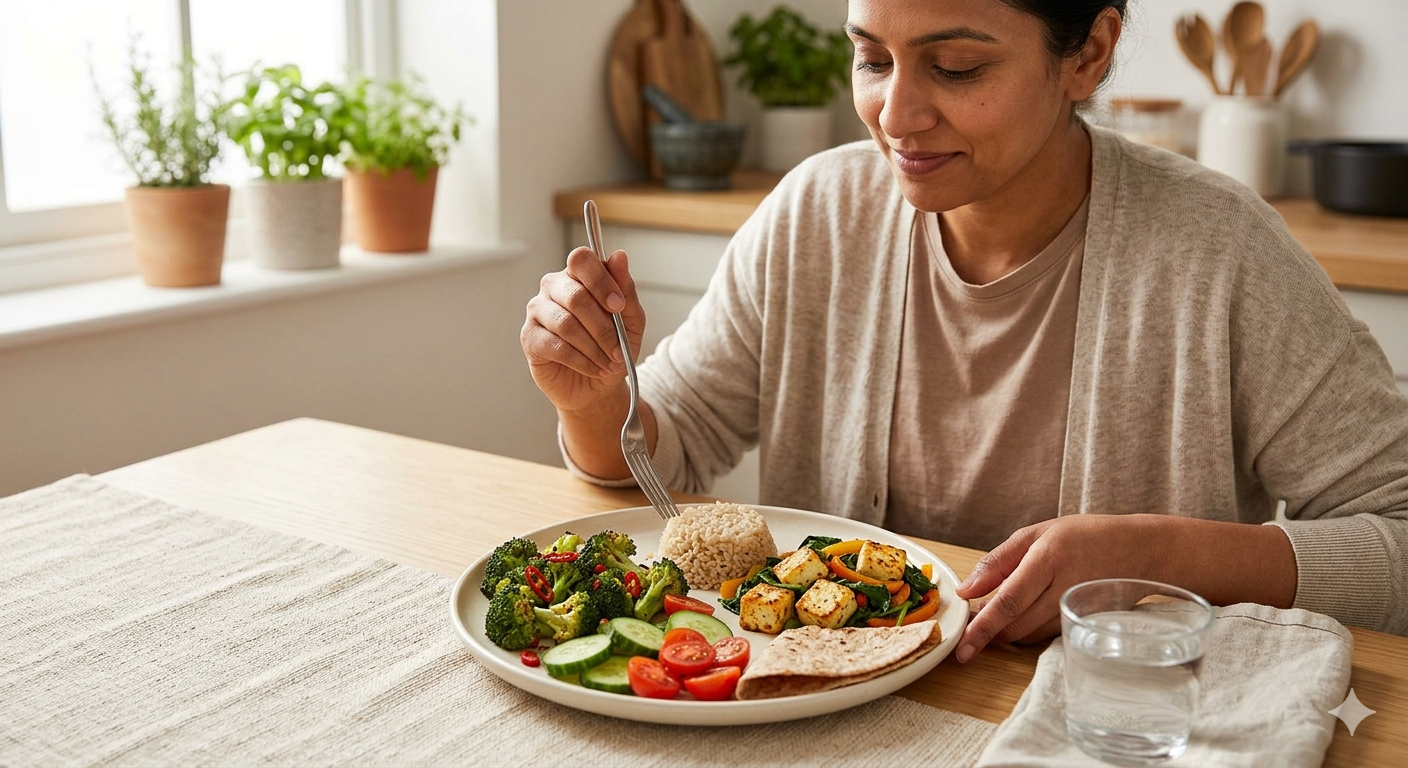
A simple and effective way to structure your meals is the balanced plate method:
- Half your plate: Non-starchy vegetables (spinach, broccoli, cucumber)
- One-quarter: Lean protein (chicken, paneer, tofu, eggs)
- One-quarter: Complex carbohydrates (brown rice, whole grains, millets)
Healthy fats like nuts, seeds, or olive oil can be added in small amounts to enhance satiety and support blood sugar control.
This method ensures you’re not overloading on carbs while still getting essential nutrients.
⚖️ Key Portion Control Habits to Adopt
1. Eat Slowly and Mindfully
One of the simplest yet most effective habits is slowing down while eating. It takes about 15–20 minutes for your brain to register fullness. When you eat too quickly, you’re more likely to overeat before your body signals that you’re full.
Focus on chewing thoroughly, enjoying each bite, and avoiding distractions like phones or TV.
2. Use Smaller Plates and Bowls
This might sound simple, but it works. Using smaller plates creates the illusion of a fuller plate, helping you feel satisfied with less food. This visual trick can prevent overeating without making you feel deprived.
3. Measure Portions Initially
When starting out, it helps to measure your food using cups or a kitchen scale. Over time, you’ll develop a natural sense of portion sizes.
This is especially important for high-carb foods like rice, pasta, and bread, which can quickly lead to excess glucose intake if not controlled.
4. Balance Every Meal
Avoid eating carbohydrates alone. Pair them with protein and healthy fats to slow down glucose absorption.
For example:
- Instead of just fruit, add nuts or yogurt
- Pair roti with dal and vegetables
Balanced meals help prevent rapid blood sugar spikes.
5. Avoid Eating Straight from Packages
Eating directly from snack packets often leads to mindless overeating. Instead, serve a small portion in a bowl and put the rest away.
This simple step creates awareness and helps you stick to your intended portion.
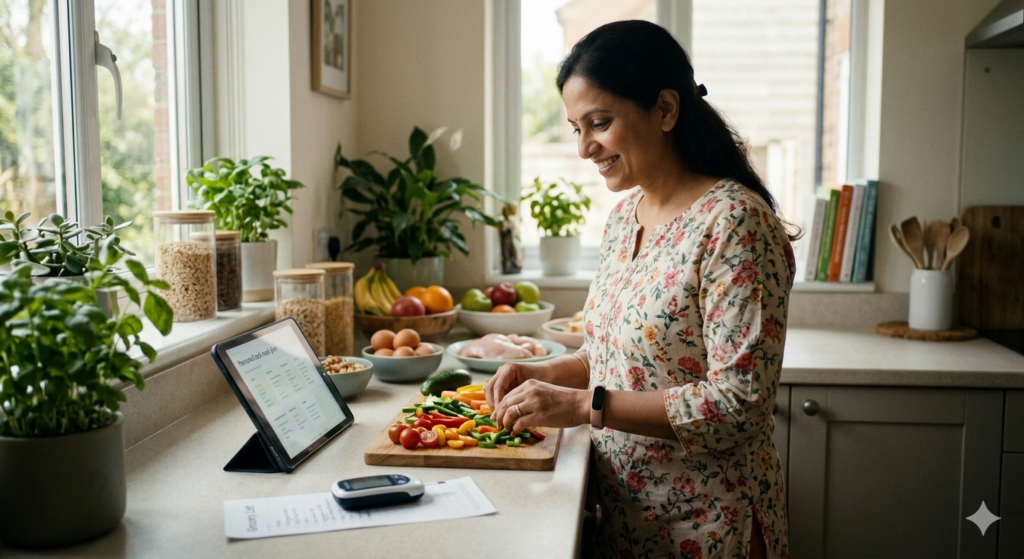
6. Plan Your Meals in Advance
Planning meals reduces impulsive eating and helps you control portion sizes better. When you know what you’re going to eat, you’re less likely to overeat or choose unhealthy options.
Meal planning is especially helpful for busy individuals who tend to rely on quick, high-carb meals.
7. Listen to Your Hunger Signals
Learn to distinguish between real hunger and emotional cravings. Eat when you’re genuinely hungry and stop when you’re comfortably full—not stuffed.
This habit takes time to develop but is key to long-term success.
8. Stay Hydrated
Sometimes, thirst is mistaken for hunger. Drinking water before meals can help you avoid unnecessary overeating and improve portion control.
9. Limit Second Servings
Going back for seconds can easily double your calorie and carbohydrate intake. Before taking another serving, wait a few minutes and assess whether you’re truly still hungry.
10. Control Portion Sizes When Eating Out
Restaurant meals are often larger than necessary. You can:
- Share meals with others
- Order half portions
- Pack leftovers
Being mindful while eating out helps you stay consistent with your goals.
🍏 Portion Control for Different Food Groups
Carbohydrates
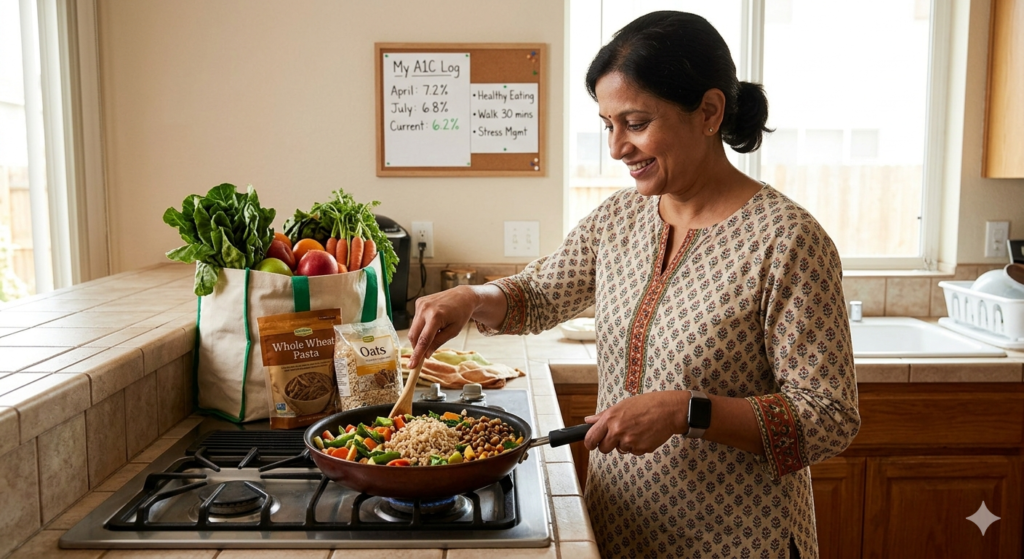
Carbs have the biggest impact on blood sugar. Focus on portioning:
- 1 small bowl of rice
- 1–2 rotis
- Controlled servings of fruits
Choose complex carbs over refined ones.
Proteins
Protein helps stabilize blood sugar and keeps you full longer. Include a moderate portion in every meal.
Fats
Healthy fats are calorie-dense, so portion control is important. A small handful of nuts or a teaspoon of oil is usually sufficient.
⚠️ Common Portion Control Mistakes
Even with good intentions, certain mistakes can hinder progress:
- Assuming “healthy” foods can be eaten in unlimited quantities
- Skipping meals and then overeating later
- Ignoring liquid calories like sugary drinks
- Eating too quickly
- Not reading portion sizes on food labels
Being aware of these pitfalls can help you stay on track.
🧠 Psychological Benefits of Portion Control
Portion control isn’t just physical—it also affects your mindset.
When you develop control over your eating habits, you feel more confident and in charge of your health. It reduces guilt associated with overeating and helps build a positive relationship with food.
Over time, these habits become automatic, making healthy eating feel natural rather than restrictive.
🌱 Long-Term Impact on Blood Sugar Management
Consistent portion control can lead to:
- Stable blood sugar levels
- Reduced risk of insulin resistance
- Better weight management
- Improved energy levels
- Lower risk of diabetes-related complications
It’s not about perfection—it’s about consistency.
💡 Simple Daily Routine for Portion Control
To make things easier, follow this basic routine:
- Start your day with a balanced breakfast
- Eat at regular intervals
- Keep portions moderate
- Include protein in every meal
- Avoid late-night overeating
These small steps can make a big difference over time.
🌟 Final Thoughts
Portion control is one of the most practical and sustainable ways to manage blood sugar levels. You don’t need extreme diets or complicated rules—just mindful eating and balanced portions.
By paying attention to how much you eat, you can prevent blood sugar spikes, maintain steady energy, and support your overall health. The goal isn’t to restrict yourself but to create a balanced approach that works for your lifestyle.
Remember, small changes lead to big results. Start with one habit at a time, stay consistent, and gradually build a healthier relationship with food.