

Is Drinking 8 Glasses a Day a Myth? The Truth About Daily Water Intake
For years, the advice to drink eight glasses of water a day has been repeated across health blogs, fitness communities, and even by well-meaning doctors. It sounds simple and easy to follow, which is probably why it has stuck around for so long. But when you take a closer look, you may start to wonder—does everyone really need exactly eight glasses of water every day, or is this just a widely accepted myth?
The truth is that while staying hydrated is essential for overall health, the “8 glasses a day” rule is not backed by strong scientific evidence. In fact, modern research suggests that hydration needs are far more personalized than this one-size-fits-all recommendation. Understanding where this idea came from and what your body actually needs can help you make smarter and healthier choices.
The origin of the eight-glass rule is somewhat unclear, but many experts trace it back to a 1945 guideline that suggested adults should consume around 2.5 liters of water daily. What people often overlook, however, is that this recommendation included water from all sources, not just drinking water. Foods like fruits, vegetables, and even beverages like tea and milk were part of this total. Over time, the message was simplified into “drink eight glasses of water,” and the nuance was lost.
When we look at current scientific evidence, there is no strong support for the idea that everyone must drink exactly eight glasses of water per day. Studies show that hydration needs vary significantly depending on several factors, including body size, activity level, climate, and diet. For example, someone who exercises regularly or lives in a hot and humid environment will naturally require more fluids than someone who is mostly sedentary and lives in a cooler climate. Because of these differences, a fixed number like eight glasses cannot apply to everyone.
Another important point that often gets ignored is that water doesn’t only come from what you drink. Many foods contain a high percentage of water and contribute significantly to your daily hydration. Fruits like watermelon, oranges, and strawberries are rich in water, as are vegetables like cucumber and lettuce. Even beverages such as tea, coffee, and milk count toward your daily fluid intake. This means that your body is constantly receiving fluids from multiple sources, not just plain water.
Instead of focusing on a specific number of glasses, it is more useful to understand how much water your body actually needs. General guidelines suggest that men require about 3.7 liters of total fluids per day, while women need around 2.7 liters. However, these figures include water from food and all beverages, not just drinking water. So if you are eating a balanced diet that includes water-rich foods, you may not need to drink as much water as you think.
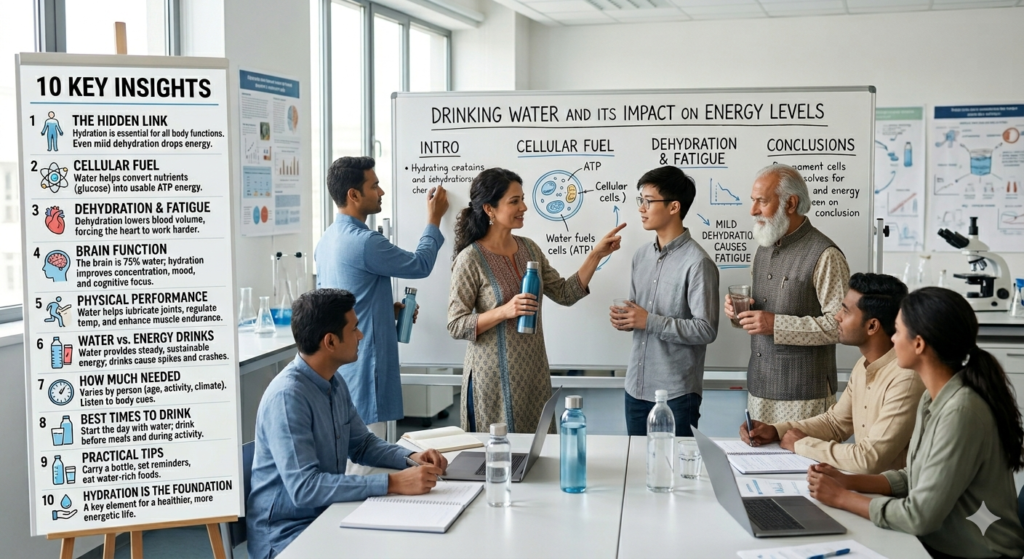
A more practical and reliable way to stay hydrated is to pay attention to your body’s signals. Thirst is one of the most effective indicators that your body needs water. When you feel thirsty, it’s your body’s natural way of telling you to drink. Other signs of dehydration include dark yellow urine, fatigue, headaches, and dry skin. Even mild dehydration can affect your mood, concentration, and energy levels, so it’s important to stay aware of these signals.
While not drinking enough water can be harmful, it is also possible to drink too much. Overhydration, though rare, can lead to a condition called hyponatremia, where the sodium levels in your blood become dangerously low. This can cause symptoms such as nausea, confusion, and swelling, and in severe cases, it can be life-threatening. This highlights an important point—more water is not always better. Balance is key.
The best approach to hydration is simple: drink when you are thirsty and adjust your intake based on your lifestyle. If you are exercising, spending time in the heat, or recovering from an illness, your body will need more fluids. In these situations, you should be more mindful of your water intake rather than relying solely on thirst. On the other hand, if you are not very active and consume a diet rich in water-containing foods, your fluid needs may be lower.
Staying properly hydrated offers a wide range of health benefits. It helps regulate body temperature, supports digestion, improves physical performance, and can even aid in weight management. Proper hydration also plays a role in maintaining healthy skin and preventing issues like kidney stones. However, these benefits come from drinking the right amount of water for your body—not from blindly following a fixed rule.
There are also several myths surrounding water intake that contribute to confusion. One common belief is that only plain water counts toward hydration, which is not true. Another myth is that you should force yourself to drink water even if you’re not thirsty. For most healthy individuals, thirst is a reliable guide, and there is no need to overcomplicate things. The idea that more water automatically leads to better health is also misleading, as excessive intake can do more harm than good.
The reason the eight-glass rule became so popular is largely due to its simplicity. It’s easy to remember and easy to follow, which makes it appealing. However, health is rarely that simple. As our understanding of the human body evolves, it has become clear that personalized approaches are far more effective than generalized rules.
In conclusion, the idea that everyone must drink eight glasses of water a day is largely a myth. While it serves as a rough guideline, it does not account for individual differences in lifestyle, environment, and dietary habits. Instead of focusing on a fixed number, it is better to listen to your body, stay aware of hydration signals, and adjust your intake as needed. Hydration is not about hitting a target—it’s about maintaining balance.
Ultimately, the key to good hydration lies in awareness rather than strict rules. By understanding your body’s needs and responding accordingly, you can ensure that you stay healthy, energized, and properly hydrated without stressing over how many glasses of water you’ve had.