

What to Eat and Avoid on a Keto Diet (Complete Beginner’s Guide)
The ketogenic diet, commonly known as keto, has become one of the most popular approaches for weight loss and metabolic health. However, success on keto largely depends on knowing exactly what to eat and what to avoid. Unlike general low-carb diets, keto requires strict control over carbohydrate intake to keep your body in a state of ketosis, where fat is burned for energy instead of glucose.
Understanding the right food choices can make your keto journey smooth, effective, and sustainable. This guide breaks everything down in a simple, practical way so you can confidently plan your meals.
1. Understanding the Basics of Keto Eating
Before diving into food lists, it is important to understand how the keto diet works. The main goal of keto is to drastically reduce carbohydrate intake while increasing fat consumption. This shift forces your body into ketosis, where it burns fat for fuel.
Typically, a keto diet consists of around 70–80% fat, 10–20% protein, and only 5–10% carbohydrates. This means your food choices should prioritize high-fat, low-carb options while avoiding sugar and starch.
Unlike traditional diets, keto is not about calorie counting alone. It is about choosing the right macronutrients. Even small amounts of excess carbs can interrupt ketosis, which is why food selection becomes crucial.
Once you understand this balance, it becomes easier to decide what belongs on your plate and what should be avoided.
2. Healthy Fats: The Foundation of Keto
Fats are the cornerstone of a ketogenic diet. Since carbs are restricted, fats become your primary source of energy. Including the right types of fats is essential for maintaining ketosis and overall health.
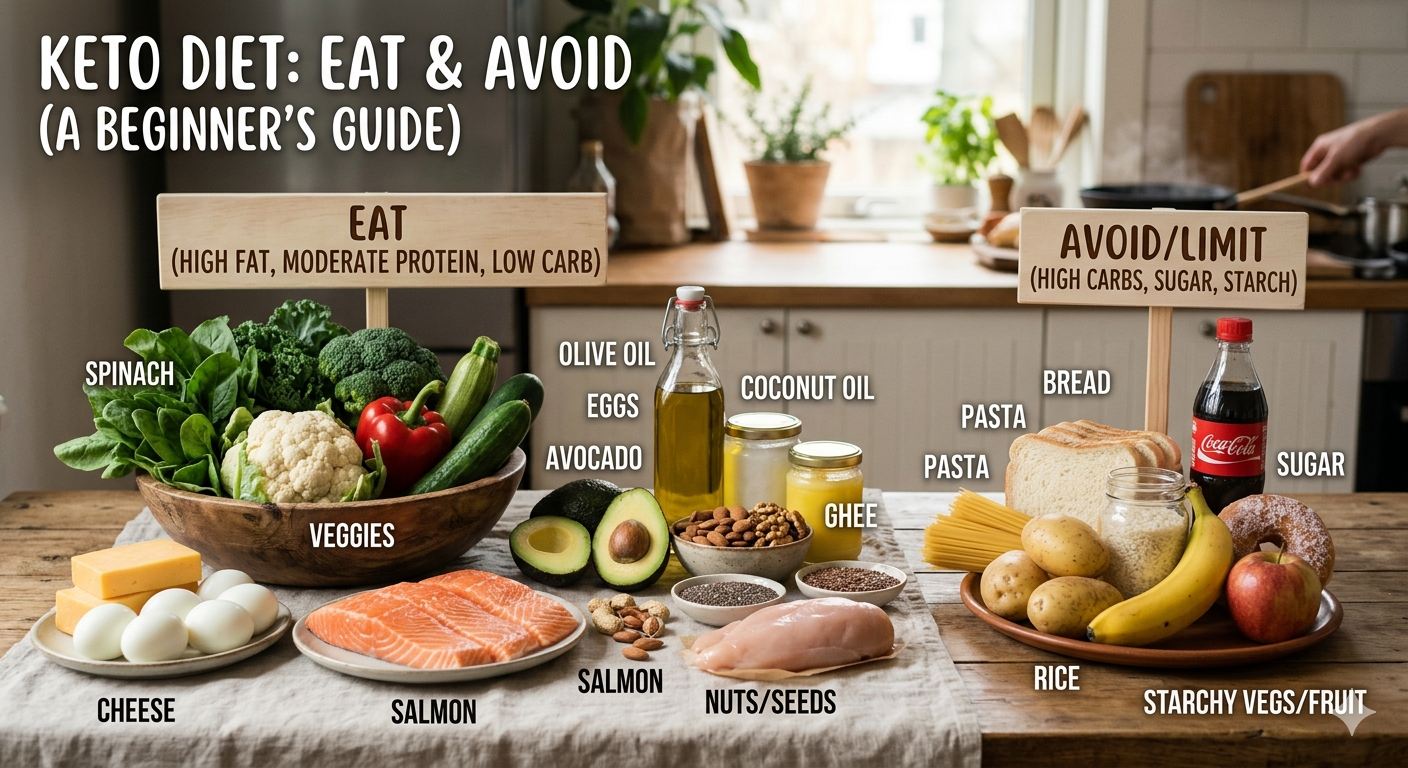
Healthy fats include foods like butter, ghee, olive oil, coconut oil, avocados, nuts, and seeds. These not only provide energy but also help you feel full and satisfied.
It is important to focus on quality fats rather than processed or trans fats. Natural sources are always a better choice as they support heart health and provide essential nutrients.
Many beginners struggle with increasing fat intake, but it becomes easier with simple additions like cooking in ghee, adding olive oil to salads, or snacking on nuts.
3. Protein Sources on Keto
Protein plays a moderate but important role in a keto diet. While it is essential for muscle maintenance and overall health, consuming too much protein can interfere with ketosis.
Good protein sources include eggs, chicken, fish, paneer, tofu, and meat. These foods provide necessary nutrients without adding excess carbohydrates.
The key is to maintain balance. Unlike high-protein diets, keto requires moderation. Excess protein can be converted into glucose through a process called gluconeogenesis, which may affect ketosis.
Including protein in every meal helps maintain muscle mass while supporting satiety, making it easier to stick to the diet.
4. Low-Carb Vegetables You Can Eat
Vegetables are an essential part of a healthy keto diet, but not all vegetables are keto-friendly. The focus should be on low-carb, non-starchy vegetables.
Options like spinach, broccoli, cauliflower, zucchini, cucumber, capsicum, and leafy greens are excellent choices. These vegetables are rich in fiber, vitamins, and minerals while being low in carbohydrates.
They help improve digestion and prevent common keto side effects like constipation. Including a variety of vegetables also ensures balanced nutrition.
Avoid starchy vegetables like potatoes, corn, and peas, as they contain high amounts of carbohydrates and can disrupt ketosis.
5. Fruits: What’s Allowed and What’s Not
Fruits are generally considered healthy, but many are high in natural sugars, making them unsuitable for keto. This often surprises beginners.
On a keto diet, only low-carb fruits should be consumed in small quantities. Berries like strawberries, blueberries, and raspberries are the best options due to their lower sugar content.
Fruits like bananas, apples, mangoes, and grapes are high in carbs and should be avoided. Even though they are nutritious, they can quickly exceed your daily carb limit.
Portion control is key when it comes to fruits on keto. Even allowed fruits should be consumed carefully to maintain ketosis.
6. Dairy Products on Keto
Dairy can be a great addition to a keto diet if chosen wisely. Full-fat dairy products are preferred because they align with the high-fat requirement of keto.
Foods like cheese, butter, cream, and full-fat yogurt can be included in moderation. They provide healthy fats and enhance the taste of meals.
However, not all dairy products are keto-friendly. Milk, especially in large quantities, contains lactose (a natural sugar) and can increase carb intake.
Choosing unsweetened and full-fat options helps you stay within your carb limits while enjoying the benefits of dairy.
7. Keto-Friendly Snacks and Beverages
Snacking on keto can be simple if you choose the right options. Good snack choices include nuts, seeds, cheese cubes, boiled eggs, and keto-friendly protein snacks.
For beverages, water should always be the primary choice. Other options include black coffee, green tea, and herbal teas without sugar.
Avoid sugary drinks like sodas, fruit juices, and energy drinks, as they are loaded with carbohydrates.
Staying hydrated is especially important on keto, as the body tends to lose more water during the initial stages of the diet.
8. Foods to Completely Avoid on Keto
Certain foods are strictly off-limits on a ketogenic diet due to their high carbohydrate content. These include sugar, sweets, soft drinks, baked goods, and processed snacks.
Grains such as rice, wheat, pasta, and bread should also be avoided. These are major sources of carbs and can quickly take you out of ketosis.
Starchy foods like potatoes and corn are another category to avoid. Even small portions can exceed your daily carb allowance.
Being aware of hidden sugars in packaged foods is also important. Reading labels helps you avoid accidental carb intake.
9. Hidden Carbs and Common Mistakes
One of the biggest challenges on keto is hidden carbohydrates. Many foods that seem healthy can contain unexpected sugars.
Sauces, dressings, packaged snacks, and even some “low-fat” products often contain added sugars. These can disrupt ketosis without you realizing it.
Another common mistake is overeating protein or not consuming enough fat. Both can prevent your body from staying in ketosis.
Tracking your food intake, especially in the beginning, can help you stay on the right path and avoid these common pitfalls.
10. Sample Keto Meal Structure
A simple keto meal plan includes a balance of fats, proteins, and low-carb vegetables. For breakfast, you might have eggs cooked in butter with avocado.
Lunch could include grilled chicken with a salad dressed in olive oil, while dinner might consist of paneer or fish with sautéed vegetables.
Snacks can include nuts or cheese, and beverages should be sugar-free. The goal is to maintain consistency throughout the day.
Planning meals in advance makes it easier to stick to keto and avoid unhealthy choices.
11. Final Thoughts: Building a Sustainable Keto Diet
Following a keto diet successfully is not just about restriction—it is about making smart and sustainable food choices. Understanding what to eat and what to avoid is the foundation of long-term success.
While keto can deliver excellent results, it requires discipline and awareness. Choosing whole, natural foods over processed options ensures better health outcomes.
It is also important to listen to your body and make adjustments as needed. Not everyone responds to keto in the same way.
With the right approach, keto can be a powerful tool for improving health, managing weight, and boosting energy levels.