

3 Mistakes Ruining Your Fat Loss on GLP-1 (And How to Fix Them)
Introduction
GLP-1 medications have made fat loss feel easier than ever. Reduced hunger, better portion control, and steady weight loss—on paper, it sounds like a perfect system.
But here’s the reality most people don’t talk about:
A lot of people still struggle to get the results they expected.
Some lose weight but feel weak.
Some plateau too early.
Others lose muscle instead of fat.
The problem isn’t the medication.
The problem is how people use it.
If you’re relying only on appetite suppression and ignoring the fundamentals of fat loss, you could be making critical mistakes that slow your progress or even damage your results long-term.
Let’s break down the 3 biggest mistakes ruining fat loss on GLP-1—and how to fix them properly.
Mistake #1: Eating Too Little (Extreme Undereating)
The Problem
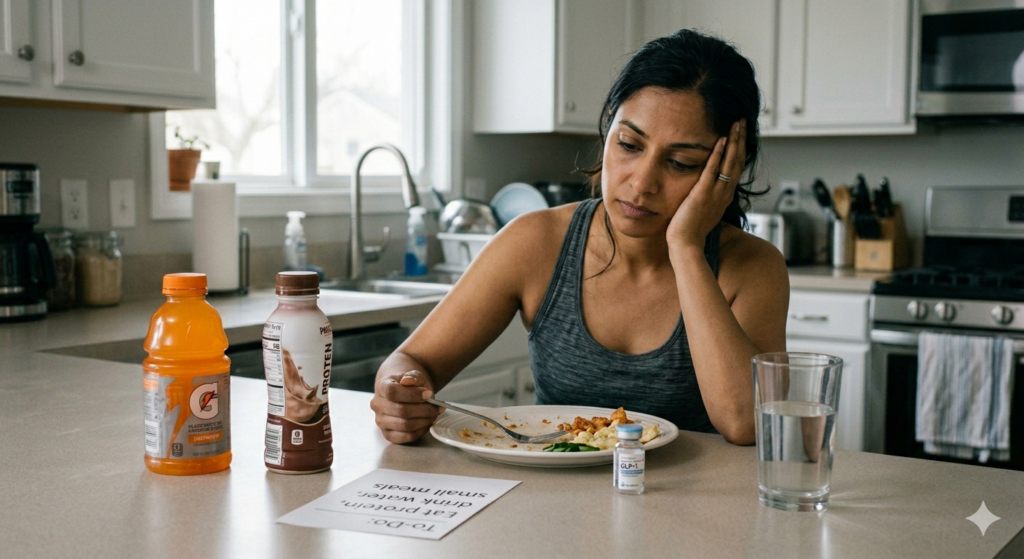
One of the biggest advantages of GLP-1 is appetite control. But for many people, this becomes a problem.
They go from eating normally to:
- Skipping meals
- Eating once or twice a day
- Consuming extremely low calories
At first, this feels like rapid progress. The scale drops quickly. But underneath, your body is starting to struggle.
Why This Ruins Fat Loss
Fat loss isn’t just about eating less—it’s about eating smart.
When calories drop too low:
- Your metabolism slows down
- Your body conserves energy
- Fat loss efficiency decreases
- Hormonal balance gets disrupted
Your body starts thinking:
“Food is scarce. I need to survive.”
So instead of burning fat efficiently, it starts holding onto it.
What Happens Over Time
- Fat loss plateaus
- Energy levels crash
- Cravings return aggressively
- You feel weak and tired
Worse, when you increase food again, your body is more likely to store fat quickly.
The Fix
You don’t need extreme restriction—you need controlled structure.
- Stay in a moderate calorie deficit
- Avoid dropping below a sustainable intake
- Focus on nutrient-dense foods
Simple rule:
If you constantly feel drained, dizzy, or exhausted—you’re probably under-eating.
Mistake #2: Ignoring Protein and Muscle Loss
The Problem
Most people on GLP-1 focus only on one thing:
Eating less.
But they ignore what they are eating—especially protein.
With reduced appetite, meals often become:
- Carb-heavy snacks
- Random small portions
- Low-protein foods
This leads to a dangerous outcome: muscle loss.
Why This Ruins Fat Loss
Your goal is not just weight loss—it’s fat loss.
When you lose muscle:
- Your metabolism slows down
- Your body burns fewer calories
- Your shape worsens (skinny-fat look)
- Strength and energy drop
Muscle is what gives your body structure and keeps your metabolism active.
Lose it—and fat loss becomes harder over time.
The Hidden Danger
On GLP-1, weight loss can be fast. Without enough protein:
- A significant portion of that weight can be muscle
- You may look smaller, but not healthier
- Long-term fat regain becomes easier
The Fix
Protein becomes your most important nutrient.
Aim for:
- 1.2–1.6g protein per kg body weight
Focus on:
- Eggs
- Dairy
- Lean meats
- Plant-based protein sources
If appetite is low:
- Use shakes or easy-to-eat protein options
Bonus Fix: Strength Training
Even light resistance training can:
- Preserve muscle
- Improve fat loss quality
- Boost energy levels
You don’t need a gym—consistency matters more than intensity.
Mistake #3: Ignoring Hydration, Electrolytes, and Nutrients
The Problem
This is the most overlooked mistake.
GLP-1 reduces hunger—but it can also reduce:
- Thirst signals
- Overall intake (including minerals and vitamins)
People unknowingly:
- Drink less water
- Eat fewer micronutrients
- Ignore electrolyte balance
Why This Ruins Fat Loss
Your body needs more than just calories to function.
Without proper hydration and nutrients:
- Energy production drops
- Muscles function poorly
- Fatigue increases
- Recovery slows down
This leads to:
- Weakness
- Dizziness
- Poor workouts
- Reduced fat-burning efficiency
Common Signs
- Feeling tired all day
- Headaches
- Muscle cramps
- Low stamina
- Brain fog
These are often mistaken as “normal dieting effects”—but they’re not.
The Fix
1. Hydration First
- Aim for 2.5–3 liters of water daily
- Don’t rely on thirst alone
2. Balance Electrolytes
Make sure you’re getting:
- Sodium
- Potassium
- Magnesium
Simple additions like:
- Salted meals
- Fruits like bananas
- Nuts and seeds
can make a big difference.
3. Focus on Micronutrients
Since you’re eating less, every meal matters more.
Prioritize:
- Whole foods
- Vegetables
- Fruits
- Balanced meals
The Bigger Picture: Why These Mistakes Happen
These mistakes come from a simple misunderstanding:
“If I eat less, I’ll lose more fat.”
But fat loss isn’t just about eating less—it’s about supporting your body while losing fat.
GLP-1 changes your appetite, but it doesn’t replace:
- Nutrition
- Movement
- Recovery
What Optimal Fat Loss on GLP-1 Looks Like
When done correctly, fat loss should feel:
- Sustainable
- Energizing (not draining)
- Structured
- Controlled
You should:
- Lose fat steadily
- Maintain strength
- Feel stable energy levels
Simple Daily Framework
To avoid these mistakes, follow this:
1. Eat Enough (But Smartly)
Don’t crash diet. Maintain a controlled deficit.
2. Prioritize Protein
Build every meal around it.
3. Stay Hydrated
Water is non-negotiable.
4. Move Your Body
Strength + basic activity is enough.
5. Listen to Signals
Weakness is feedback—not something to ignore.
Long-Term Impact of Fixing These Mistakes
When you correct these issues:
- Fat loss becomes more consistent
- Energy improves
- Muscle is preserved
- Results look better physically
Most importantly:
You don’t just lose weight—you build a better body.
Conclusion
GLP-1 can be a powerful tool—but only if used correctly.
The 3 biggest mistakes ruining fat loss are:
- Eating too little
- Ignoring protein and muscle
- Neglecting hydration and nutrients
Fix these, and everything changes.
You’ll not only lose fat faster—you’ll:
- Feel stronger
- Stay energized
- Maintain results long-term
Because real transformation isn’t about eating the least—
it’s about doing it the right way.