

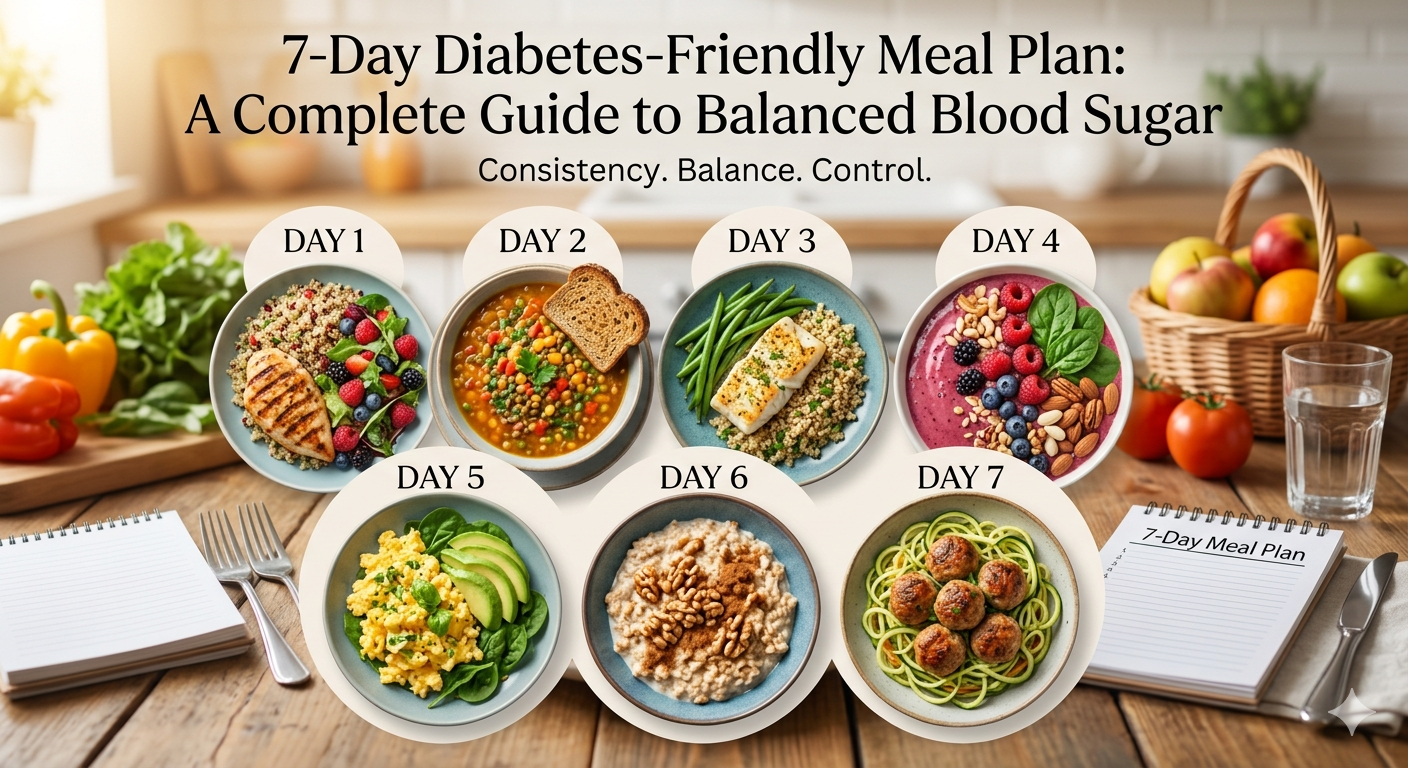
7-Day Diabetes-Friendly Meal Plan: A Complete Guide to Balanced Blood Sugar
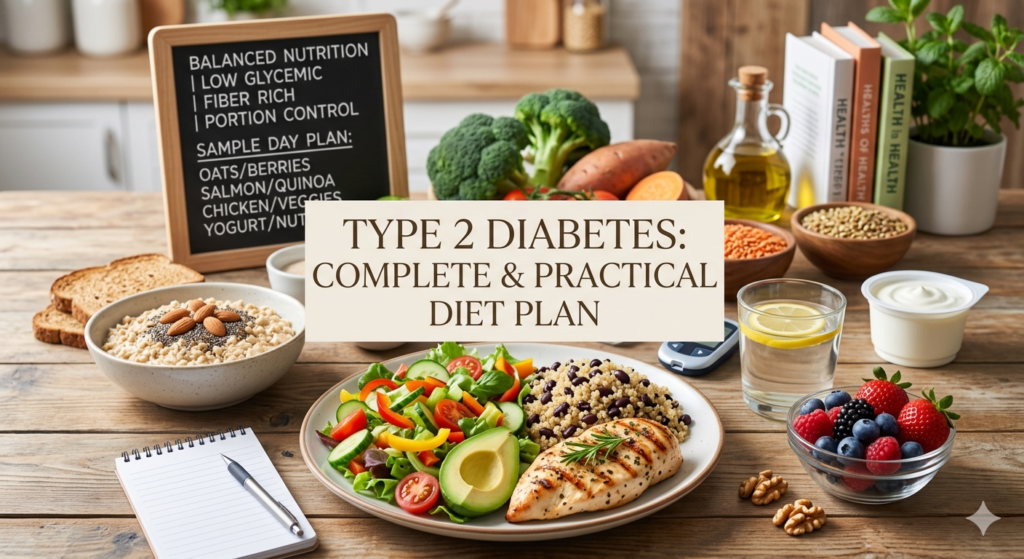
Managing type 2 diabetes becomes much easier when you have a structured meal plan. Instead of wondering what to eat each day, a 7-day diabetes-friendly meal plan helps you stay consistent, balanced, and in control of your blood sugar levels. The key is choosing whole foods, managing portions, balancing macronutrients, and spreading meals evenly throughout the day.
Below is a complete 7-day meal plan guide divided into 10 detailed sections (200–300 words each) to help you understand not just what to eat — but why it works.
- Why a 7-Day Meal Plan Works for Diabetes Management
Planning your meals for the week removes guesswork and reduces the temptation to grab processed or high-sugar foods. For people managing type 2 diabetes, consistency is crucial. Blood sugar levels respond better when meals are balanced and eaten at regular intervals.
A 7-day diabetes-friendly meal plan ensures you are getting a proper mix of complex carbohydrates, lean protein, healthy fats, and fiber. This combination slows glucose absorption and prevents sharp spikes and crashes.
Meal planning also supports portion control. When you pre-plan your meals, you’re less likely to overeat or consume hidden sugars and refined carbohydrates. It encourages mindful grocery shopping and better kitchen habits.
Another benefit is nutritional variety. By mapping out meals for seven days, you naturally include different vegetables, fruits, proteins, and whole grains, which improves nutrient intake.
Most importantly, a weekly plan reduces stress. When you know exactly what’s on the menu, you feel more confident and in control of your health journey.
- Key Nutrition Principles Behind This 7-Day Plan
Before diving into daily menus, it’s important to understand the structure behind this diabetes-friendly meal plan.
Each day includes three balanced meals and one or two healthy snacks. Every meal contains protein, fiber-rich carbohydrates, and healthy fats to stabilize blood sugar. Refined sugars and processed foods are minimized.
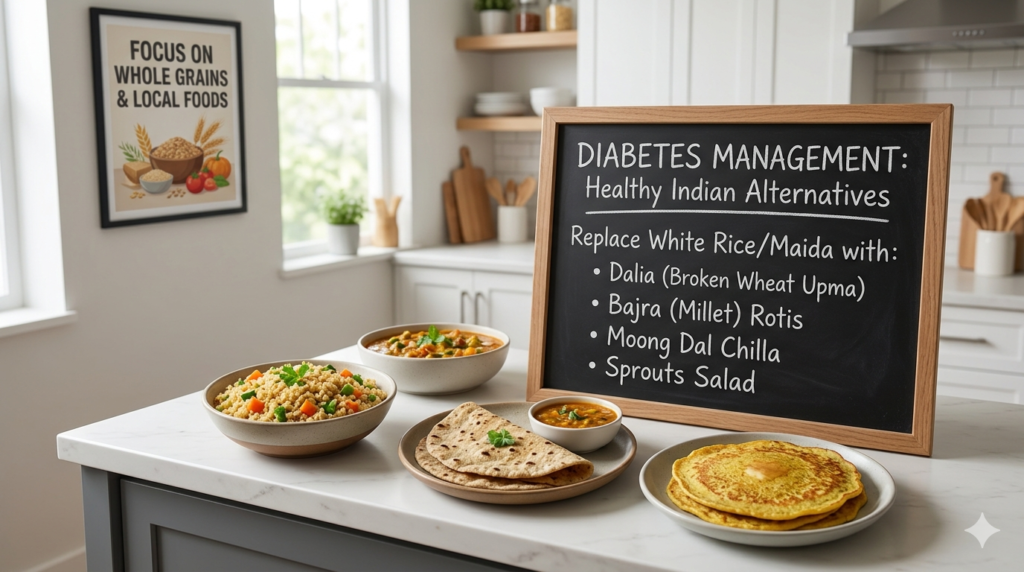
Carbohydrates come mainly from whole grains, legumes, fruits, and non-starchy vegetables. These provide slow-releasing energy rather than quick glucose spikes.
Lean proteins such as chicken, fish, eggs, tofu, Greek yogurt, and legumes are included daily to improve satiety and support muscle health.
Healthy fats from olive oil, nuts, seeds, and fatty fish are incorporated in moderate amounts to support heart health.
Portion control is emphasized. Even healthy carbohydrates are served in controlled amounts to maintain blood glucose balance.
Hydration is also important. Drinking water throughout the day supports metabolism and helps regulate blood sugar.
This structured approach makes the meal plan practical, sustainable, and effective for long-term diabetes management.
- Day 1: Balanced and Fiber-Rich Start
Day 1 focuses on fiber and protein to set the tone for stable blood sugar.
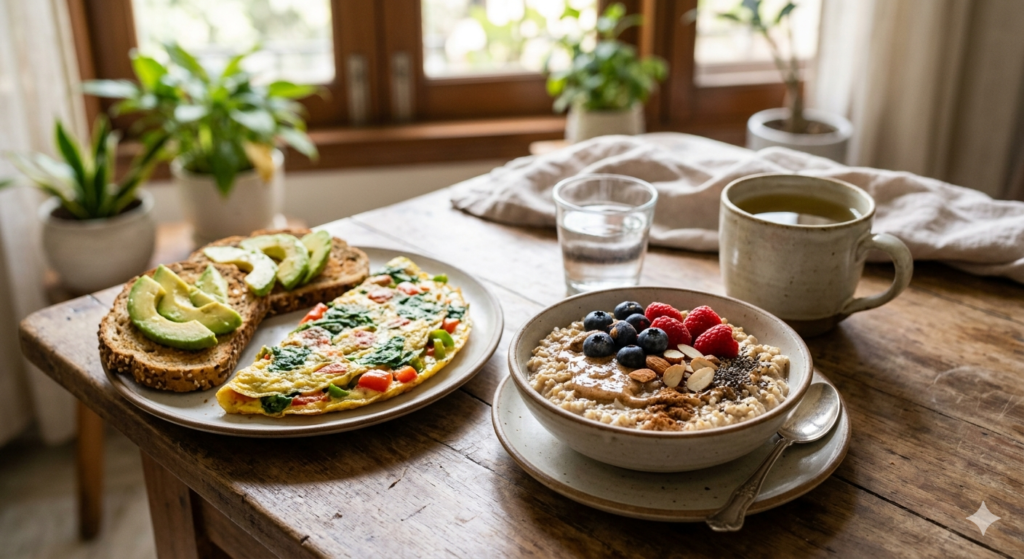
Breakfast includes oatmeal topped with blueberries and chia seeds, paired with a boiled egg. The fiber from oats and berries slows digestion, while protein from the egg prevents spikes.
Mid-morning snack: Greek yogurt with a handful of almonds for protein and healthy fats.
Lunch consists of grilled chicken breast, quinoa, and a large mixed vegetable salad dressed with olive oil and lemon juice. This meal balances complex carbs, lean protein, and healthy fats.
Afternoon snack: An apple with natural peanut butter to balance fruit sugars with protein and fat.
Dinner features baked salmon, steamed broccoli, and a small serving of brown rice. Salmon provides omega-3 fatty acids, supporting heart health.
This day provides steady energy, high fiber intake, and balanced macronutrients, making it ideal for blood sugar control.
- Day 2: Plant-Based Focus with Lean Proteins
Day 2 emphasizes plant-based foods while maintaining protein balance.
Breakfast: Vegetable omelet with spinach, mushrooms, and tomatoes, served with one slice of whole-grain toast.
Snack: Cottage cheese with sliced cucumber.
Lunch: Lentil soup with a side salad and a drizzle of olive oil. Lentils provide plant protein and fiber that support glucose stability.
Snack: A small handful of walnuts and a pear.
Dinner: Grilled tofu or baked chicken with roasted Brussels sprouts and sweet potato (controlled portion).
This day is rich in antioxidants, fiber, and lean protein. The variety of vegetables helps support digestion and heart health while keeping carbohydrates moderate.
- Day 3: Low Glycemic, High Satiety Meals
Day 3 focuses on low glycemic foods to prevent blood sugar spikes.
Breakfast: Greek yogurt parfait with raspberries, flaxseeds, and a small portion of oats.
Snack: Hard-boiled egg and cherry tomatoes.
Lunch: Turkey lettuce wraps filled with avocado, shredded carrots, and hummus.
Snack: A small apple with a handful of pistachios.
Dinner: Baked cod, sautéed green beans, and quinoa.
The emphasis today is on slow-digesting carbohydrates and protein-rich meals that increase fullness and reduce cravings.
- Day 4: Heart-Healthy and Anti-Inflammatory Choices
People with diabetes are at higher risk for heart disease, so Day 4 focuses on heart-friendly foods.
Breakfast: Smoothie made with unsweetened almond milk, spinach, protein powder, and berries.
Snack: Handful of mixed nuts.
Lunch: Grilled salmon salad with leafy greens, cucumber, tomatoes, and olive oil dressing.
Snack: Greek yogurt with cinnamon.
Dinner: Stir-fried chicken with broccoli, bell peppers, and brown rice (controlled portion).
Omega-3 fats and antioxidant-rich vegetables dominate this day, promoting both blood sugar stability and cardiovascular protection.
- Day 5: High-Protein Energy Support
Day 5 boosts protein to enhance satiety and muscle maintenance.
Breakfast: Scrambled eggs with avocado slices and sautéed spinach.
Snack: Protein-rich cottage cheese.
Lunch: Chickpea and vegetable bowl with tahini dressing.
Snack: A handful of almonds and a small orange.
Dinner: Grilled lean steak (small portion), roasted cauliflower, and quinoa.
This day balances protein and fiber to prevent mid-day energy crashes and reduce hunger spikes.
- Day 6: Light but Balanced Meals
Day 6 offers lighter meals without compromising blood sugar control.
Breakfast: Oatmeal with walnuts and cinnamon.
Snack: Boiled egg.
Lunch: Grilled chicken Caesar salad (light dressing, no croutons).
Snack: Celery sticks with peanut butter.
Dinner: Baked tilapia, asparagus, and mashed cauliflower.
This day is lower in carbohydrates but still balanced, making it ideal for stabilizing glucose after heavier days.
- Day 7: Balanced Comfort Meals (Healthy Version)
Day 7 proves that comfort food can be diabetes-friendly.
Breakfast: Whole-grain pancakes (small portion) topped with berries and Greek yogurt instead of syrup.
Snack: Handful of nuts.
Lunch: Brown rice bowl with grilled chicken, black beans, salsa, and avocado.
Snack: Apple slices with almond butter.
Dinner: Turkey meatballs with zucchini noodles and tomato sauce.
This day provides familiar flavors while keeping portions controlled and nutrients balanced.
- Tips for Customizing Your 7-Day Diabetes-Friendly Meal Plan
Every person with diabetes is different, so personalization is important. Monitor your blood sugar to see how specific foods affect you. Adjust portion sizes based on activity levels and medication needs.
If you prefer vegetarian options, substitute animal proteins with legumes, tofu, or tempeh. If you’re trying to lose weight, slightly reduce carbohydrate portions while maintaining protein and vegetables.
Meal prepping on weekends can make the week easier. Cook grains, proteins, and vegetables in advance to save time.
Stay hydrated and aim for at least 30 minutes of daily physical activity to complement your meal plan.
A structured 7-day diabetes-friendly meal plan provides clarity, balance, and sustainability. With consistency, mindful choices, and proper portion control, you can manage your blood sugar effectively while enjoying satisfying, nutritious meals every day.